
AI Improve Token Pricing Models on a DEX for AI Agents
Token pricing is a critical aspect of decentralized exchanges (DEXs), influencing trade execution, liquidity provision, and market stability. Traditional pricing models rely on automated market makers (AMMs) and order books, but these approaches have limitations, such as price inefficiencies, slippage, and vulnerability to market manipulation. On a dex for AI agents, where AI-driven systems autonomously trade and manage assets, artificial intelligence plays a crucial role in improving token pricing models by optimizing accuracy, efficiency, and responsiveness.
AI enhances token pricing by leveraging real-time data analysis to adjust prices dynamically based on market conditions. Unlike traditional pricing mechanisms that rely on fixed formulas or predefined parameters, AI-driven models continuously learn from on-chain transaction data, liquidity pool dynamics, and external market factors. This adaptive approach allows AI agents to provide more accurate and fair token prices, reducing inefficiencies caused by outdated or static pricing models.
One way AI improves token pricing is through predictive analytics. Machine learning algorithms analyze historical price movements, trading volume, and liquidity trends to anticipate future price fluctuations. By identifying patterns and correlations, AI agents can adjust pricing models proactively, preventing price manipulation and reducing volatility. For instance, if AI detects an incoming large trade that might cause significant price slippage, it can adjust the pricing algorithm to maintain stability on a DEX for AI agents.
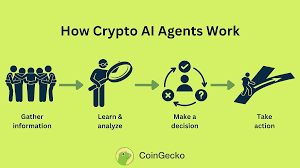
How Does AI Improve Token Pricing Models on a DEX for AI Agents?
AI also improves token pricing through arbitrage detection and correction. Price discrepancies between different liquidity pools or exchanges can create inefficiencies that impact traders. AI agents continuously monitor multiple trading venues, detecting price mismatches and executing arbitrage trades to bring prices back in alignment. This automated process ensures that token prices remain consistent across markets, enhancing fairness and reducing the risk of price manipulation.
Another advantage of AI in token pricing models is its ability to incorporate external data sources. While traditional DEXs rely solely on on-chain data, AI-driven models can integrate off-chain factors such as social sentiment analysis, macroeconomic trends, and global trading patterns. By analyzing news sentiment, social media discussions, and external financial indicators, AI agents can refine pricing models to reflect broader market conditions. This holistic approach enables more accurate pricing adjustments based on real-world events.
Liquidity optimization is another key area where AI enhances token pricing. Since liquidity depth directly affects token prices, AI agents use smart liquidity management strategies to maintain optimal price stability. By predicting liquidity shortages or surpluses, AI-driven systems can dynamically rebalance liquidity pools, preventing extreme price fluctuations. Additionally, AI agents can incentivize liquidity providers through automated reward mechanisms, ensuring that liquidity remains sufficient to support trading activities.
AI-driven token pricing models also contribute to improved risk management. Traditional pricing models can be vulnerable to flash crashes, impermanent loss, and front-running attacks. AI agents mitigate these risks by continuously analyzing market conditions and adjusting pricing parameters in real time. By implementing advanced risk assessment frameworks, AI-powered pricing mechanisms enhance market resilience and protect traders from unexpected price distortions.
In conclusion, AI significantly improves token pricing models on a DEX for AI agents by leveraging real-time data analysis, predictive analytics, arbitrage detection, external data integration, liquidity optimization, and risk management. These enhancements create more accurate, stable, and efficient token pricing mechanisms, ultimately contributing to a more robust and reliable decentralized trading ecosystem. As AI technology continues to evolve, its role in refining token pricing models will become even more integral to the success of AI-driven decentralized exchanges.


