
Delamination in PCB Fabrication Assembly
A common problem in PCB manufacturing is delamination. This occurs when the laminate layers of a multilayer board separate. It can range from minor splitting to wide areas of separation that interrupt circuits and reduce a board’s longevity. It is most commonly found in complex, multilayer boards that use copper traces to connect layers, but can affect single layer and double layer PCBs as well. It often leads to electrical issues like crackling noises and unreliable solder joints, as well as heat-related problems such as thermal resistance variations, crosstalk, and signal reflections. It can also interfere with the physical structure of a board, making it susceptible to vibrations and mechanical stress.
The most common cause of delamination is moisture. When a pcb fabrication assembly is exposed to heat (such as during the reflow, wave, and hand-soldering process), or to high temperatures, it swells up with water vapor. This water vapor then expands, causing the layers of the laminate to shift and break apart. It can also be caused by inadequate bonding between the layers of the FR-4 base material or by contamination between layers of the board.
It is important to avoid delamination in the earliest stages of production because it can be difficult or even impossible to repair once it starts. To prevent it, manufacturers can ensure that they are using the right materials, controlling heat increase rates, and keeping the temperature in the lamination press consistent. They can also use a quality conformal coating to protect the entire surface of the board from damage and contaminants.
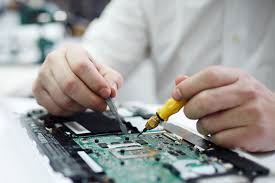
Preventing Cracking and Delamination in PCB Fabrication Assembly
While this may help, the best way to prevent delamination is by preventing moisture from reaching the PCB in the first place. This can be done through processes such as pre-baking and proper storage. The PCB assembly process can also be optimized by minimizing the amount of time that a board is exposed to heat and moisture.
The next most common cause of delamination is mechanical stresses and flexing of a PCB. Repeated cycles of heating and cooling cause differences in thermal expansion and contraction between layers of a multilayer board, leading to mechanical stresses over time. These stresses can be compounded by physical flexing, shocks, and vibrations that concentrate stress in certain areas of the board. Imbalanced resin flow, contamination, and voids can also create weak points in a PCB that are prone to delamination.
Moisture and flexing are both common causes of delamination, but they can be prevented with appropriate production processes and quality control. For example, manufacturers can test and mandate minimum bend radii for assembly and installation work to reduce overstressing of the PCB. They can also make sure that the laminate is bonded to a strong base material, and that the adhesive is suitable for the application.
Attaching heat sinks to high-power components can significantly improve heat dissipation. Heat sinks increase the surface area available for heat transfer to the surrounding air. TIMs, such as thermal pads or thermal paste, improve the thermal coupling between components and heat sinks or the PCB itself, enhancing heat transfer efficiency.
)
)
)